
 +1 829 698 0733
What Do You Need? Talk To Us
+1 829 698 0733
What Do You Need? Talk To Us8am-4pm EST/NY Monday-Friday info@aareff.com

Professional FM Broadcast Transmitters 0.1W to 2000W | AAREFF
An FM broadcast transmitter, also called an FM radio transmitter, converts broadcast audio into a frequency-modulated RF signal and supplies the RF power required by the antenna system.
Models are available with integrated stereo, RDS and audio processing, or with a professional raw MPX input for broadcasters using external stereo generators and broadcast processors. Choose the required RF power and configuration below, or use our transmitter selection guide to match the equipment to your antenna system and intended coverage.
Choose Your FM Broadcast Transmitter
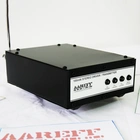
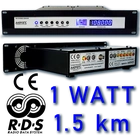
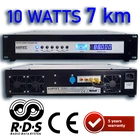
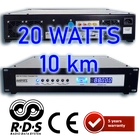
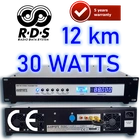
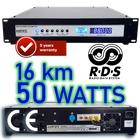
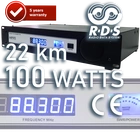
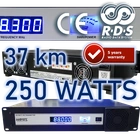
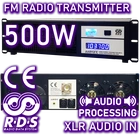
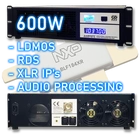
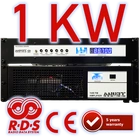
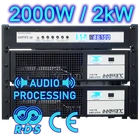
How to Choose Your FM Broadcast Transmitter
Choosing the correct FM transmitter involves more than transmitter wattage alone. The required RF power depends on your antenna system, permitted EIRP, antenna height, feeder loss, terrain and required coverage. This guide is based on AAREFF's practical RF and broadcast engineering experience.
| Planning Phase | Engineering Guidance & Technical Requirements |
|---|---|
|
1. Define Your Goal
Broadcast Area & Application |
Before comparing transmitter models, define the purpose and scale of the station.
• Low-Power / Local: Campus, institutional and short-range broadcasting. • Community: Town, community and urban broadcast applications. • Regional: Higher-power systems intended for larger service areas. • Network: Multi-site and higher-power professional broadcast systems. |
|
2. Power & EIRP
Coverage Requirements |
Effective Isotropic Radiated Power (EIRP) depends on transmitter output power, antenna gain and RF feeder loss.
A higher transmitter power does not automatically produce a proportional increase in coverage. Antenna height, terrain and antenna gain can be equally important. Actual FM coverage depends on antenna height, terrain, antenna gain, feeder loss, local interference, regulatory limits and receiver conditions. |
|
3. Legal Regulations
Compliance & Licensing |
FM broadcasting is regulated differently in each country. The transmitter, antenna system and permitted EIRP should be selected according to the technical and licensing requirements applicable to the installation.
AAREFF provides detailed RF specifications to assist broadcasters, engineers and regulators when assessing transmitter performance. |
|
4. System Integration
Antennas & Accessories |
A professional FM transmission system requires the correct supporting equipment.
• Antenna System: Select the antenna type, polarization and gain according to the required coverage pattern. • RF Feeder: Low-loss coaxial cable minimizes RF power loss between the transmitter and antenna. • Audio Processing: Integrated or external processing controls modulation and audio performance. • RDS: Adds station identification, RadioText and other digital information to the FM signal. |
|
5. Future Planning
Scalability & Growth |
AAREFF's modular transmitter architecture allows many systems to be expanded later. A lower-power transmitter or exciter can often be retained and used to drive a higher-power FM amplifier when additional RF output is required. |
Need the Entire Setup? Buy a Complete Package
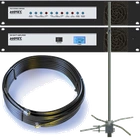
Skip the guesswork. Our Complete FM Radio Station Packages combine a matched transmitter, antenna and professional RF cabling in one ready-to-air system.
FM Broadcast Transmitter Questions & Answers
What is an FM broadcast transmitter?
An FM broadcast transmitter, also called an FM radio transmitter, converts broadcast audio into a frequency-modulated RF signal and supplies the RF power required by the antenna system. AAREFF manufactures professional FM broadcast transmitters from 0.1W to 2000W..
How do I choose the correct FM transmitter power?
The required transmitter power depends on the permitted EIRP, antenna gain, feeder loss, antenna height, terrain and target coverage area. Transmitter wattage alone does not determine FM coverage.
What is the difference between the stereo/RDS and MPX transmitter versions?
A transmitter with integrated stereo and RDS contains the audio, stereo generation and Radio Data System functions inside the transmitter. A raw MPX version is intended for broadcasters using an external stereo generator or professional broadcast processor.
What equipment is required with an FM transmitter?
A complete FM transmission system normally requires the transmitter, a suitable FM antenna, low-loss RF feeder cable and an appropriate audio or MPX source. The exact equipment depends on the installation and required coverage.
Can I increase the transmitter power later?
Many AAREFF systems can be expanded by using the existing transmitter or exciter to drive a higher-power FM amplifier. This can allow a station to increase RF output without replacing the complete transmission system.
What warranty is supplied with AAREFF FM transmitters?
AAREFF professional FM transmitters are supplied with a 5-year limited warranty, subject to the applicable warranty terms and conditions.

Engineering Leadership: Paul Hollings
Hi there. I'm Paul Hollings , Head Engineer at AAREFF Systems.
I have more than 35 years of engineering and broadcast experience. My early career included plant maintenance engineering for the NHS before moving into broadcast engineering at the BBC, where I worked with transmitter and test equipment.
During the 1990s I became Head of Design at Veronica Ltd, developing FM exciters and MOSFET RF amplifier systems that became widely used by broadcasters internationally.
Today, as an IEEE Full Member, I oversee AAREFF transmitter development and production with particular emphasis on RF performance, long-term reliability and professional broadcast operation.


 Support from an Engineer