
 +1 829 698 0733
What Do You Need? Talk To Us
+1 829 698 0733
What Do You Need? Talk To Us8am-4pm EST/NY Monday-Friday info@aareff.com

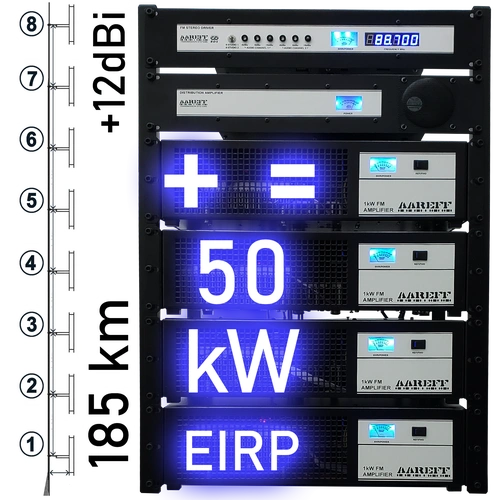
50kW EIRP Complete FM Radio Transmitter Broadcasting System

|
5 YEARS
LIMITED WARRANTY |
PACKAGE CHECKLIST
| Qty | Description | Item |
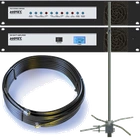
| 1 | FM Stereo Driver with Audio Processing |  |
| 1 | Distribution Splitter Amplifier |  |
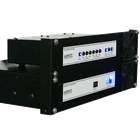
| 4 | 1000W FM Power Amplifier | 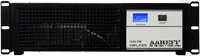 |
| 4 | LMR600 40m /131ft Cables | 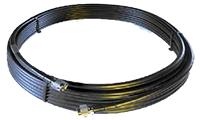 |
| 1 | All Other Connecting Cables |  |
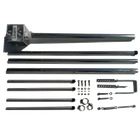
| 8 | Broadband High Power Folded Dipole Antenna with Tower Mounting Clamps | 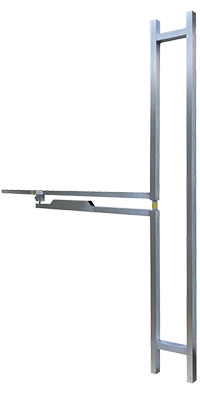 |
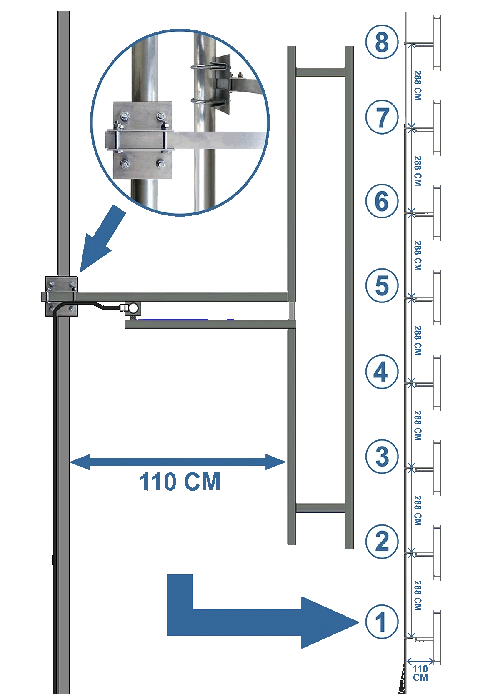
2 dBi Antenna Gain: The Key to Long-Range FM Transmission
System Importance & Key Specifications
The antenna system is the most critical component for maximizing range, directly dictating signal coverage.
• Antenna Type: Uses eight optimally spaced folded dipoles.
• Achieved Gain: Produces 12 dBi of antenna gain.
• Resulting Power: This gain effectively multiplies the signal pointing to the horizon by 15.85 times (due to 12 dBi), resulting in a massive EIRP transmission signal.
Antenna length, shape, installation, and height are the primary factors determining signal reach (tens of miles vs. less than one mile). A high-gain antenna is essential for achieving long-range FM coverage.
The Veronica® system is engineered to deliver a high-impact audio signature. Whether you rely on our internal high-performance processing or your own external rack equipment, our architecture ensures absolute signal integrity.
| Processing Stage | Technical Advantage & Function |
|---|---|
| The Signal Foundation | Utilizes the renowned Veronica® 1W Exciter. This PLL-driven foundation prevents frequency drift and ensures a super-low noise floor for professional carrier integrity. |
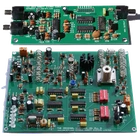
| Internal Audio Chain | Includes an Internal Stereo Coder for wide separation and a Dynamic Audio Processor. These boards apply precise limiting and compression to deliver a 'loud and crisp' commercial sound. |
| Professional Bypass | Engineered for flexibility. The internal limiter and stereo coder can be completely disabled to accommodate external processors such as Orban, Inovonics, or PC-generated MPX/RDS signals. |
| Chief Engineer Control | Allows the station's engineering team to maintain their specific 'processing signature' by providing a transparent path for the external MPX baseband signal. |
40m (130 Ft) LMR-600 Coaxial Cable: Low-Loss & High-Power
Professional Antenna Connectivity.
Our 40 meter (130 feet) antenna cables utilize high-quality, low-loss LMR-600 foam coaxial cable for optimal signal integrity. This configuration ensures peak performance:
• Function: Connects each amplifier output to the high-powered folded dipole antennas.
• Connectors: 40 Meters (130 Feet).
• Loss Performance: Terminated with robust, high-power 7-16 DIN connectors.
Flexible Length Options & Pricing.
We accommodate specific installation requirements for expert broadcasters:
• Custom Lengths: If you require lengths greater than 40 meters (40m), custom runs are available.
• Pricing: A small extra cost applies for longer runs. Simply contact us for a message with the price and proforma invoice.
Do You Have A Question?
50kW Maximum FM Transmission Range Chart: Real-World Listener Data
Understanding Typical Broadcast Coverage
The following range chart is derived from real-world customer reporting, providing a reliable baseline for expected broadcast coverage. This data reflects the typical distances recorded by professional and community stations utilizing our 1W EIRP systems.
- Data Source: Based on average customer signal reports across various geographical environments.
- Verification: Reports are compiled from direct listener communication (phone, text, WhatsApp) to radio stations operated by Aareff customers.
- Zero-Failure Promise: Because this system is perfectly impedance-matched (1W Transmitter to 0dB Dipole), it ensures exactly 1W EIRP is radiated, maximizing range without equipment strain.
It is important to understand that FM transmission range is influenced by numerous variables (e.g., terrain, antenna height, atmospheric conditions, local noise floor). For a detailed breakdown of the factors affecting signal propagation, refer to our dedicated guide on FM Transmission Range.

DECLARATION OF CONFORMITY
European Union
We hereby declare that this equipment complies with;
• ETS 300384 European Telecommunications Harmonised Standard when used with an audio compressor limiter supplied and tested by Aareff
• EN 301489-11 V1.3.1 (2006-05) EMC Electromagnetic Compatibility when used with 1 meter AC mains cord supplied. If the installation engineer needs to extend this cord, this and the audio input cable should be no more than 3 meters in length to remain in compliance with EMC directive.
• 2006/95/EC Directive (2006-12) LVD Low Voltage Directive.
Equipment compliance is possible using equipment from and in conjunction from other manufacturers, but since this is beyond the control of Aareff Systems, Aareff Systems cannot or be expected to guarantee compliance in this situation.
United States
The following list are the FCC technical requirements for FM broadcasting. We confirm and verify that this transmitter complies with the technical requirements.
47 CFR Chapter I Federal Communications Commission sections:
• 73.1560, 2.1046 RF Power
• 73.1545, 2.1055 Frequency Stability
• 73.317, 2.1049 (e)(3) Emission Limitation, Emission Mask
• 73.317, 2.1057, 2.1051 Emission Limits, Spurious Emissions at Antenna Terminal
• 73.317, 2.1057, 2.1053 Emission Limits, Field Strength of Spurious Emissions